Every organisation strives for the same goal of maximising profit by reducing expenses and improving operational efficiency. While companies continually seek effective ways to achieve this, one of the most powerful solutions is implementing a robust Customer Relationship Management (CRM) system. Surprisingly, many businesses still rely on outdated and inefficient methods, such as spreadsheets, to manage vital customer data. This lack of automation and integrated workflow becomes a significant drain on time, labour and resources.
A modern CRM, however, offers immediate relief by transforming how you manage customer interactions. Hence, you gain precise, reliable information that helps you avoid unnecessary spending and operate far more efficiently. Let’s explore in detail some specific ways a CRM can dramatically reduce your business expenses.
Why is CRM so important?
A CRM helps businesses streamline and systemise their efforts in lead capture, lead tracking and overall lead management. It enables teams to convert leads into customers more quickly and effortlessly by keeping every interaction organised. By consolidating customer information into a single, accessible database, business consultants and sales teams can manage data with ease and avoid confusion or duplication.
Using a CRM also helps companies set realistic and achievable sales targets based on past performance and current capacity, making planning far more accurate. Regardless of a company’s size, industry or business model, a CRM has become essential for maintaining efficient operations and supporting long-term growth. It ensures that every lead is handled properly and that no opportunity is lost due to disorganisation or outdated processes.
7 ways CRM can reduce the costs of your business
Automation of Routine Tasks
A CRM system significantly enhances automation by taking over repetitive, time-consuming administrative tasks. It eliminates the need for manual work such as sending reminder emails, updating records or entering data, tasks that are often prone to errors when done by hand. By automating these processes, a CRM ensures consistent, accurate execution every single time. This not only saves valuable time but also frees employees to focus on high-value, strategic activities instead of routine admin work. As a result, businesses can operate more efficiently and even reduce labour costs that would otherwise be spent on additional staff to handle these tasks.
Streamlined Sales and Lead Management
A CRM is truly a partner to the sales team, providing a central platform where all lead and customer information is stored, shared and updated. This unified system allows sales reps to track progress, coordinate tasks and stay aligned throughout the entire sales process. With a clear, real-time view of every lead’s journey, the team can easily spot bottlenecks and know exactly what action is needed to keep a deal moving forward.
Because a CRM brings together all customer-related data in one place, sales reps no longer waste time re-learning a lead’s history during handovers. This not only improves efficiency but also reduces labour costs per sale. With complete visibility of past interactions, teams can set accurate future targets and confidently identify opportunities for upselling or cross-selling. Sales reps can also see their daily, monthly and quarterly goals clearly, helping them stay organised and performance-driven.
Improved Customer Retention
Acquiring a new customer is significantly more expensive than retaining an existing one, which makes customer satisfaction a crucial cost-saving factor for any business. A CRM helps strengthen retention by storing all customer preferences, interactions and history in one place. This allows teams to resolve issues faster, offer personalised follow-ups and avoid missed messages or delayed responses.
With complete visibility of each customer’s journey, businesses can identify potential issues early and take timely action to prevent dissatisfaction. By addressing customer needs efficiently, a CRM helps reduce churn and encourages customers to stay longer. These long-term, loyal customers contribute to steady revenue and reduce the ongoing cost of constantly acquiring new ones.
Targeted Marketing Outreach
A CRM allows businesses to get far more value from their marketing budget by ensuring every campaign reaches the right audience. By segmenting customers based on factors such as industry, interests or past purchases, companies can send relevant and personalised promotions instead of relying on broad, scattered outreach. This prevents unnecessary spending on audiences who are unlikely to convert.
With clear customer insights, marketing teams can focus their efforts on high-potential leads and automate personalised messages to each segment. Over time, this approach leads to more effective campaigns that require fewer resources, as the CRM highlights which strategies perform well and which ones do not. This enables smarter targeting, better engagement and a higher return on marketing investment.
Data-Driven Decision Making
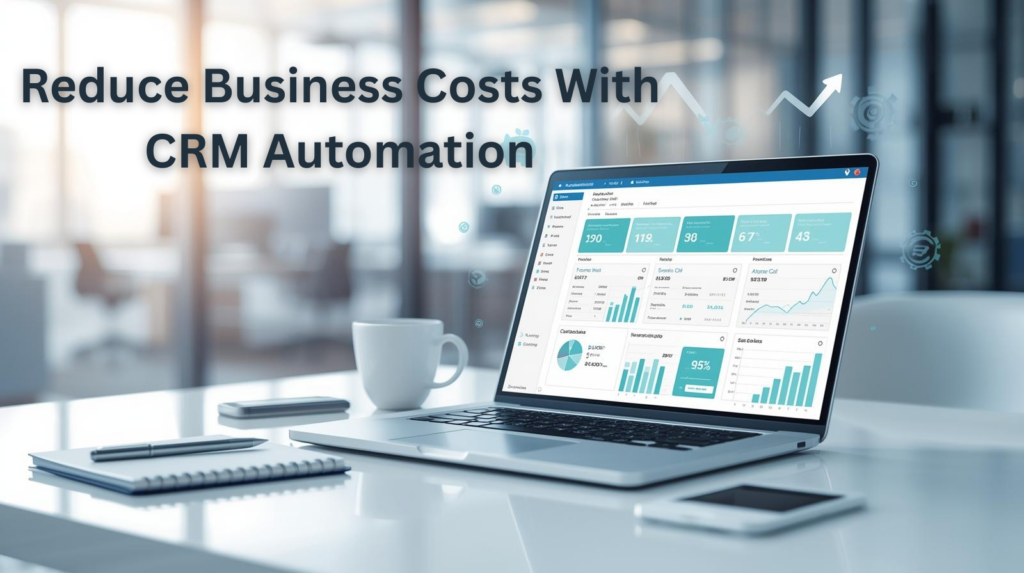
Businesses gain crucial insights with crm that they need to identify inefficiencies and make informed decisions. It transforms raw data into easy-to-understand metrics through integrated reporting tools, allowing managers to track key performance indicators with real-time charts and visual dashboards. Whether it’s analysing sales pipelines, campaign performance or customer support trends, a CRM provides a clear picture of where resources are being used effectively and where improvements are needed.
With instant access to accurate data, decision-makers can quickly adjust strategies without waiting for manually compiled reports. This eliminates the need for employees to spend hours creating spreadsheets and ensures that every choice is backed by timely, reliable information.
Cost-Effective Integration With Business Systems
Better Demand Forecasting and Inventory Control
By analysing past sales and customer trends, a CRM helps businesses predict product demand more accurately. Instead of operating blindly, you can anticipate how much of each product customers will want and when. This prevents costly overstocking and last-minute rush orders.
With integrated sales data, your production and inventory teams stay aligned, ensuring you don’t overproduce or run out of stock. That means less money tied up in unsold inventory, fewer urgent shipments, and lower storage costs overall. Accurate CRM insights help you plan smarter, spend less, and keep your inventory moving efficiently.
Bottom Line
By adopting a CRM, businesses can minimise unnecessary costs, improve productivity, and operate with far greater efficiency. Supersoft DigiAds offers a lead management solution powered by Datalink CRM, enabling businesses to handle leads more effectively and reduce avoidable spending. If you’re looking to optimise your lead process and improve cost efficiency, we invite you to explore how our CRM-based lead management service can support your business goals.