Let’s be honest if you’re investing in SEO, you want to know when you’ll see the payoff. It’s one of the most common questions we hear at Supersoft DigiAds: “How long until my website starts ranking?” The short answer? It depends. But don’t worry, we’re not leaving it at that.
SEO is a lot like planting a garden. You wouldn’t expect tomatoes the day after sowing seeds, right? It takes patience, consistent care, and the right conditions to grow. But once it starts, the results build momentum.
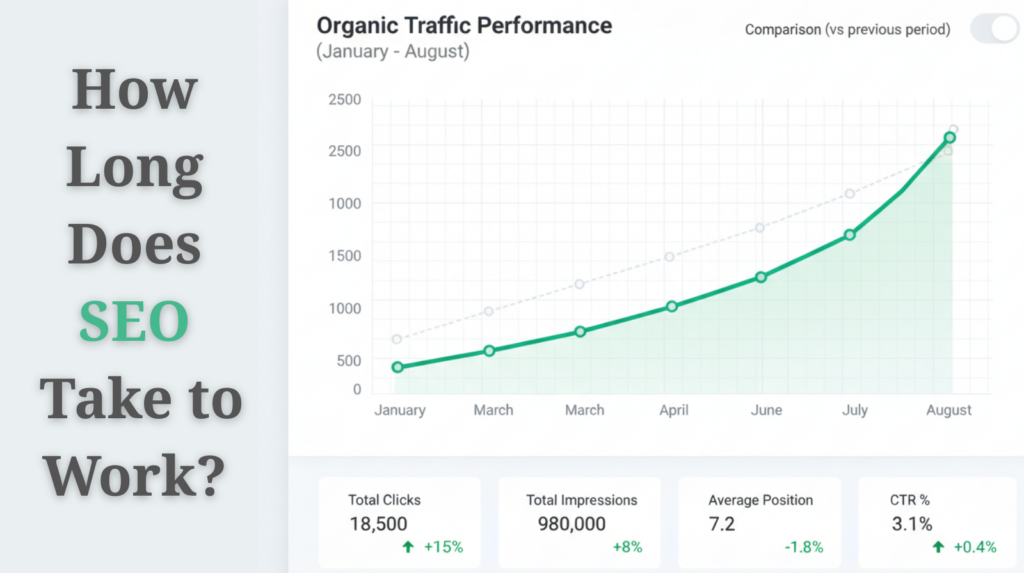
We remember one of our clients approached us after a few months of minimal visible movement. They had a genuine concern: “Is the SEO even working for us? One month went by, two months went by, three months also went by… when will we actually start seeing results?” It’s a fair concern. SEO rarely delivers overnight breakthroughs, but when executed strategically, it produces steady and measurable growth. By month five, they began seeing page-one rankings. By month eight, their organic traffic had doubled. Today, SEO generates the majority of their qualified leads.
In this guide, we’ll break down exactly what influences your SEO timeline, what a realistic month-by-month journey looks like, and how to measure real success.
What Influences How Long SEO Takes?
SEO takes time because it’s built on organic search. Google rewards websites that prove they are relevant, high-quality, user-friendly, original, and trustworthy. That means your website needs to consistently demonstrate expertise and value before strong rankings follow.
The most influential reasons behind how long SEO takes to work include:
- Your Website’s Age and History
Is your website brand new, or has it been established for several years? This plays a significant role in how quickly SEO results appear. Search engines tend to evaluate new websites cautiously because they need time to understand what the site offers and whether it can be trusted. Without existing authority, backlinks, or engagement signals, rankings don’t happen instantly.
Older websites, on the other hand, often have an advantage. They usually have accumulated quality backlinks, consistent content, and user behaviour data that helps Google better interpret and trust their pages. A new website must gradually build that authority by publishing valuable, well-optimised content and earning high-quality backlinks. Over time, as credibility grows, stronger rankings naturally follow. Industry Competition
Not all industries are equal when it comes to SEO. Some markets are highly competitive, while others offer quicker opportunities to rank. One important thing to remember is that you’re not the only business investing in SEO; your competitors are actively optimising their websites too. If you’re targeting highly competitive keywords, it will naturally take longer to see strong rankings. In crowded niches, you need to put in consistent effort to demonstrate authority, relevance, and trustworthiness before Google positions you above established competitors.
Content Quality and Quantity
Content plays a central role in how quickly your SEO gains momentum. Creating valuable, well-structured content allows you to target more relevant keywords and expand your website’s visibility. Short blog posts that barely cover a topic won’t deliver strong results. Search engines are smart enough to recognise thin content, and it rarely earns meaningful rankings. Instead, focus on producing in-depth guides, well-researched articles, and genuinely useful resources that answer real user questions. Consistency also matters. A steady publishing schedule whether weekly or bi-weekly signals to Google that your website is active and growing.
Technical Health of Your Website
Even the best content won’t perform well if your website has underlying technical issues. Search engines need to easily crawl, access, and index your pages in order to rank them properly. If your site loads slowly, isn’t mobile-friendly, or has broken links and crawl errors, it creates a poor experience for both users and search engines.
Page speed is especially important, ideally your website should load in under three seconds. With most searches happening on mobile devices, your site must also function seamlessly across smartphones and tablets.Your Backlink Profile
Backlinks act as signals of trust and authority in the eyes of search engines. When reputable websites link to your content, it strengthens your credibility and improves your chances of ranking higher. If your website has no backlinks, you are essentially building authority from scratch, which can extend your timeline to 9 months or more before seeing significant results. If you already have some quality links from relevant sources, progress may be visible within 4 to 8 months. Websites with a strong and established backlink profile often see faster ranking improvements. However, quality matters far more than quantity. One strong, relevant backlink from a respected website carries much more value than dozens of low-quality links.
Resources and Budget
The speed of your SEO results is also influenced by the resources you allocate. SEO requires an investment of time, effort, and often budget. Managing SEO on your own may reduce costs, but it usually takes longer due to limited time and the learning curve involved. Working with smaller-budget services can also slow progress if content production and link-building efforts are restricted. A comprehensive, well-managed SEO strategy where technical optimisation, content creation, and authority building happen simultaneously typically accelerates results.
Realistic SEO Timeline Framework
Now that you know what affects your SEO timeline, here’s a simplified view of how progress typically unfolds. While results vary, most SEO campaigns follow these stages when executed consistently.
Months 0–3: Foundation Phase
This stage focuses on building strong technical and strategic foundations. Technical issues are fixed, keyword research is completed, on-page elements are optimised, and initial content is published. You may not see major traffic growth yet, and slight ranking fluctuations are normal. The goal here is stability, proper indexing, and a clear direction.
Months 3–6: Early Wins Phase
Momentum begins to build. Consistent content publishing and early link-building efforts start showing results. Some long-tail keywords rank in the top 10, while others move closer to page one. Organic traffic often increases steadily, and first conversions from search may begin appearing.
Months 6–12: Growth Phase
This is where SEO starts proving its value. Multiple keywords reach page one, traffic grows significantly compared to your starting point, and authority strengthens. Organic search becomes a dependable source of leads and enquiries.
Months 12+: Maturity Phase
With strong authority and ongoing optimisation, SEO turns into a long-term growth engine. Competitive keywords rank higher, traffic compounds, and organic search becomes one of your primary revenue drivers. At this stage, your investment continues delivering consistent returns.
What Does Success in SEO Look Like?
Rankings are great, but real SEO success is about achieving meaningful business outcomes. Here’s what you should actually be measuring and celebrating:
- Organic Traffic Growth
This is the clearest sign of progress, which answers : are more people finding you through organic search? You should see steady month-over-month growth, supported by strong year-over-year gains as your SEO builds momentum. Quality matters just as much as quantity: visitors should spend meaningful time on your site and explore multiple pages. You can track this in Google Analytics under Acquisition > All Traffic > Channels > Organic Search. - Keyword Rankings and Visibility
This shows how easily potential customers can find you for relevant searches. Success means building strong page-one visibility across a range of important keywords, with several reaching the top positions where most clicks occur. A healthy SEO strategy ranks for both informational content and commercial terms, and may even capture featured snippets for additional exposure. Conversion Rate and Lead Quality
This shows whether your organic visitors are actually taking action. Success means steady growth in form submissions, calls, enquiries, or sales generated through search traffic. For e-commerce websites, this translates into increasing organic revenue. Lead quality matters just as much as volume, attracting qualified prospects is far more valuable than generating empty clicks.
Click-Through Rate (CTR)
CTR measures how compelling your search listings are when users see them. Higher positions typically earn more clicks, but well-written titles and meta descriptions can significantly improve performance at any ranking level. Monitoring CTR in Google Search Console and refining your messaging ensures your listings remain relevant and attractive to searchers.
Page Experience and Core Web Vitals
User experience plays a direct role in SEO performance. Achieving strong Core Web Vitals scores, maintaining fast loading speeds, and resolving mobile usability issues are all essential. These technical signals impact both your rankings and user satisfaction.
Ready to Start Your SEO Journey?
Whether you’re just starting out or looking to take your existing SEO to the next level, Supersoft Digiads is here to help you navigate every phase of your SEO timeline.
We understand that waiting 6-12 months can feel like forever when you’re eager to grow. That’s why we focus on quick wins early on while building the foundation for long-term success. You’ll see progress milestones along the way, not just at the finish line.
Get in touch with us today for a free SEO consultation. Let’s discuss your goals, timeline, and how we can accelerate your path to search engine success.