
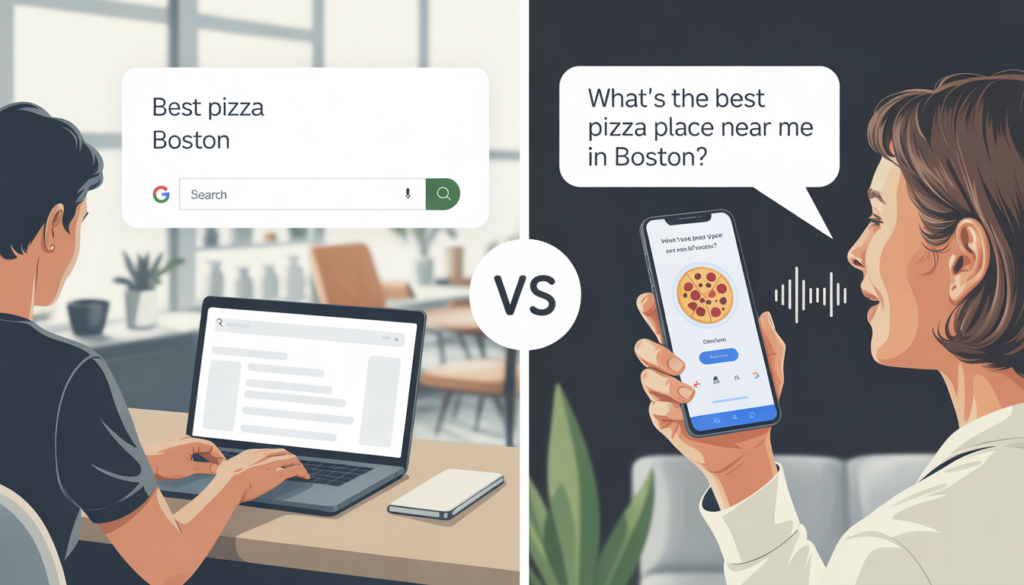
Not long ago, searching for something meant typing a few keywords into a search bar, scanning the results, and picking the best one. Today, search is more accessible and conversational—we ask Google or Siri, “What’s the temperature today?” “Where’s the nearest bakery?”, or “Give me directions home.” This shift extends to e-commerce platforms as well, where users increasingly rely on voice search to find products quickly. With roughly 28% of U.K. consumers using voice assistants daily, that’s nearly one in every three people.
Beyond boosting your website’s traditional search rankings, voice search optimisation also enhances accessibility. When your site is optimised for voice search, customers can easily discover it through spoken queries. Keeping this in mind, this article dives deep into voice search optimisation with 6 actionable tips to help improve your voice search rankings.
Let’s start.
1. Use Conversational, Long-tail Keywords
For voice search optimisation, it is essential to prioritise keywords that feel human and intuitive. Since spoken queries are typically longer and more detailed than typed fragments, focusing on these three areas will help you capture high-intent traffic:
- Conversational Keywords: Shift from “robotic” terminology to natural dialogue. By using everyday language, you align your content with the informal, verbal way users interact with AI assistants, making your site more “relatable” to search algorithms.
- Long-Tail Phrases: Prioritize specific, multi-word strings that reflect real-world descriptions. Because voice users are more descriptive (e.g., asking for a specific solution rather than a general topic), these longer phrases allow you to target niche needs with higher accuracy.
- Interrogative Structures: Organise information around the “5 Ws” (Who, What, Where, When, Why). Since most voice searches are framed as direct inquiries, providing clear, concise answers to these specific questions increases your chances of being the featured response read aloud.
2. Aim for Featured Snippets
To dominate voice search, you must target “Position 0″—the highlighted answer box at the top of Google’s results that voice assistants prioritize. Since these devices typically read the featured snippet aloud as the definitive answer, you can secure this spot by:
- Using Structured Lists: Organize your content with clear bullet points or numbered steps. Google’s algorithm prefers this layout for “how-to” or “best-of” queries, frequently pulling these lists directly into the snippet.
- Drafting Concise Responses: Provide immediate, direct answers to common industry questions. Keeping these answers brief and factual makes it easier for search engines to identify your text as the perfect solution for a verbal inquiry.
3. Improve Page Speed and Mobile Experience
When it comes to voice search, speed matters. Users expect immediate answers, and search engines are far more likely to prioritise fast-loading pages for both mobile and voice search results. If your website takes too long to load, it might cost you the first spot on search queries. You can speed up your website by optimising technical elements. Converting images to modern formats such as WebP, minifying CSS and JavaScript files, and removing unnecessary redirects can significantly reduce load times and improve overall performance.
It’s also important to remember that most voice searches take place on mobile devices. This makes a mobile-friendly experience essential. Your website should be easy to navigate on smaller screens, with clear, readable text and buttons that are large enough to tap comfortably.
4. Focus on Local Voice Search SEO
A significant number of voice searches carry local intent, with users frequently including phrases like “near me” when looking for services or businesses. Because voice assistants are designed to deliver quick, relevant results, they rely heavily on local data to answer these queries accurately.
To capture local voice search traffic, it’s essential to claim and fully optimize your Google Business Profile. This is often the primary source voice assistants use when providing local answers. Ensure your business name, address, phone number, and operating hours are accurate and up to date. Consistency is equally important. Your NAP details should match across your website, directories, and social platforms to build trust with search engines. Additionally, targeting location-specific keywords and adding local business schema markup to your website helps search engines clearly understand where your business operates, increasing your chances of appearing in local voice search results.
5. Create Voice-Friendly, Conversational Content
Your content should be written in a way that feels natural when spoken aloud. Voice assistants favour simple language, so using short sentences and an approachable, conversational tone makes your content easier to understand and deliver as a spoken response. Page titles and headings also play an important role in voice search optimization. Titles should be descriptive and sound natural, reflecting how users phrase their queries when speaking. Including phrases that point directly to solutions within your meta titles helps voice assistants recognise your page as a relevant and useful source.
Structuring your content with clear H1 and H2 headings that mirror common user questions allows search engines to quickly identify the intent of your page. Most importantly, ensure that questions are answered directly and clearly within the content.
6. Enhance Accessibility for a Voice-Friendly User Experience
Voice search users often rely on assistive technologies, which means improving your website’s accessibility also strengthens your voice search SEO. Adding descriptive alt text to images, using clear and meaningful link labels, and providing transcripts for video or audio content allows voice assistants to understand and present your content more effectively. While voice assistants can’t interpret media files directly, they can read and process text-based information. Securing your website with HTTPS also plays a role in accessibility and trust. A secure site makes it easier for users to access your content safely and signals reliability to search engines, increasing the likelihood of your pages being prioritised.
Conclusion
You can’t ignore voice search if you want your overall SEO strategy to truly flourish. As voice search continues to grow, implementing these strategies will help your website appear in more voice queries and stay competitive as voice search continues to grow.
Elevate your brand with the voice search specialists at Supersoft Digiads, the premier digital marketing agency for innovative, forward-thinking strategies. Ready to unlock the full potential of voice search? Connect with our team today, and let’s collaborate to build a voice-ready digital presence that speaks directly to your customers.