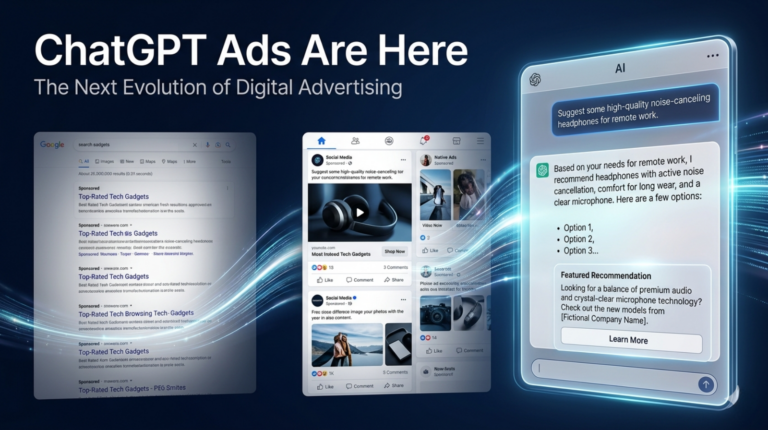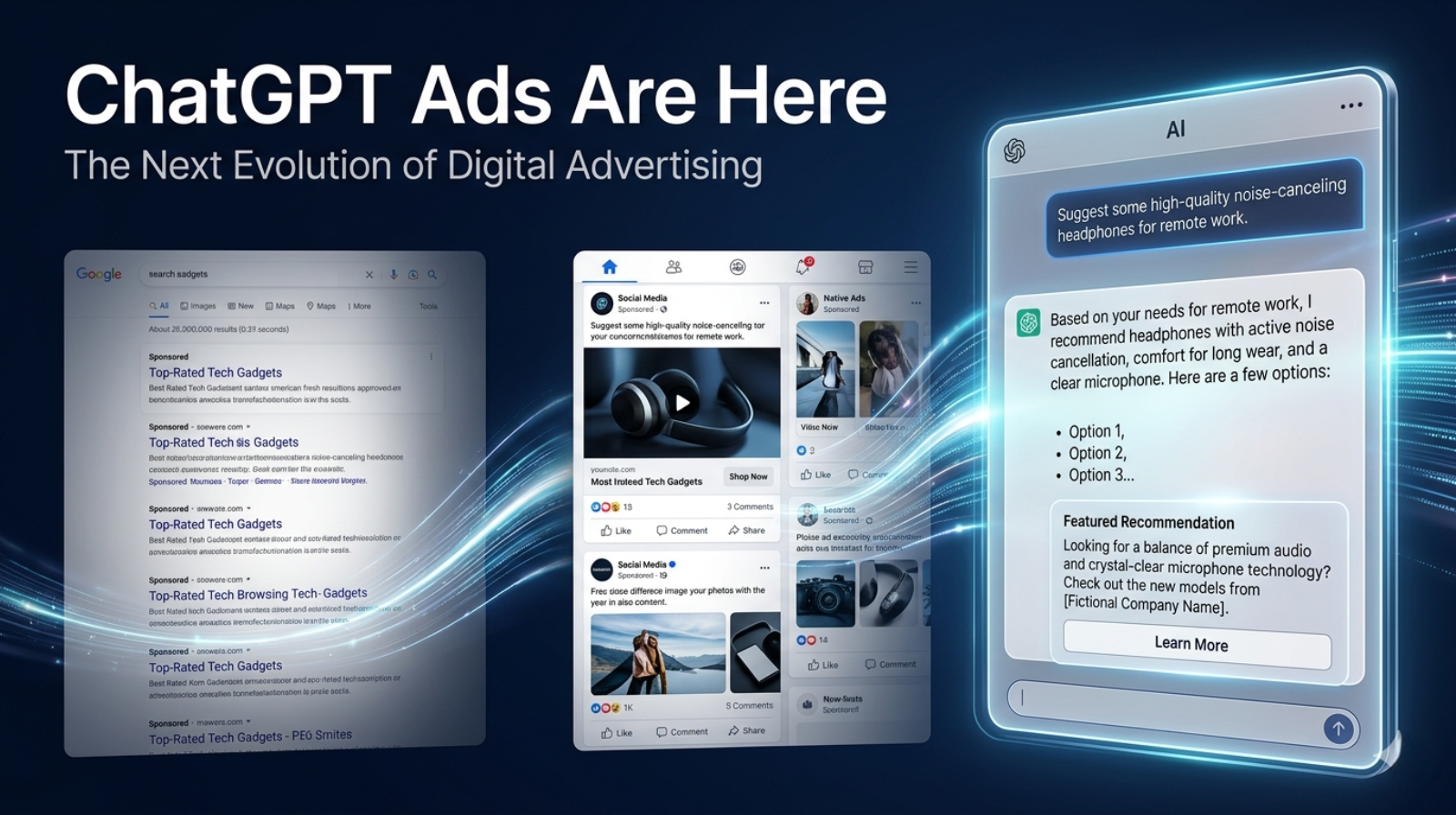
For years, paid media has received attention. First, it was search engines, with brands competing to appear at the exact moment someone typed a query. Then attention shifted to social media, and advertising followed, slipping into feeds, stories, and timelines, meeting people within their daily digital habits.
Now, attention is moving somewhere new. People are increasingly bypassing traditional search altogether. Instead of Googling, they’re asking. They’re opening ChatGPT and typing out their actual problem, looking for direct answers.
Which means paid media is moving again.
OpenAI recently announced the introduction of advertising into ChatGPT. In this post, we’re going to break down exactly how ChatGPT ads work, what businesses need to know right now, and how to position your business for what could become the next major shift in paid media.
What Businesses Need to Know About ChatGPT Ads
Whether you’re actively planning to advertise on ChatGPT or simply keeping an eye on where the industry is heading, there are a few fundamentals worth understanding first.
1. You Are Reaching a Specific Audience
ChatGPT ads are shown exclusively to users on the free plan and the Go tier. Anyone on Plus, Pro, Business, or Enterprise sees no ads, and that is entirely by design. Paying subscribers have made a financial commitment to the platform, and serving them ads would undermine the very experience they are paying for. OpenAI has drawn a clear line between the two.
It is also worth keeping in mind that ChatGPT is still in the early stages of this rollout. Introducing ads to paying customers at this point would put their most loyal and valuable user base at risk. This means that ads on ChatGPT reach the free and Go tier audiences who use the platform regularly but have not committed to a paid plan. It is a large and engaged audience, and for the right business, that is a significant opportunity.
2. Targeting Is Based on Conversation Context
Unlike Meta, which builds targeting around demographic profiles, interests, and social connections, ChatGPT prioritises conversational context over user characteristics. There is no interest graph, no browsing history, no profile built up over months of behaviour. Instead, ads are matched to what is happening in the conversation right now.
If someone is asking about project management tools, they may see an ad for relevant software. If they are researching home insurance, a financial services brand may appear. The targeting is topical and immediate, which means your messaging needs to be built around the problems your audience is actively trying to solve, not just who they are as a person.
3. Ads Do Not Influence ChatGPT’s Answers
OpenAI has been consistent on this point. The platform operates on what it calls an “Answer Independence” principle, meaning advertising revenue never influences the AI’s core responses. The answers users receive remain unbiased, and ads appear as clearly labelled sponsored placements in separate interface elements. The answer always comes first. The sponsored content follows only when contextually relevant.
For businesses, think of it like PPC on Google. Organic results take time, effort, and consistency to build, and not every business can afford to wait. ChatGPT works similarly. A brand may not yet have the authority or presence to be referenced organically in ChatGPT’s responses, but through advertising, they can claim a spot that surfaces immediately after that organic answer.
4. Ad Formats
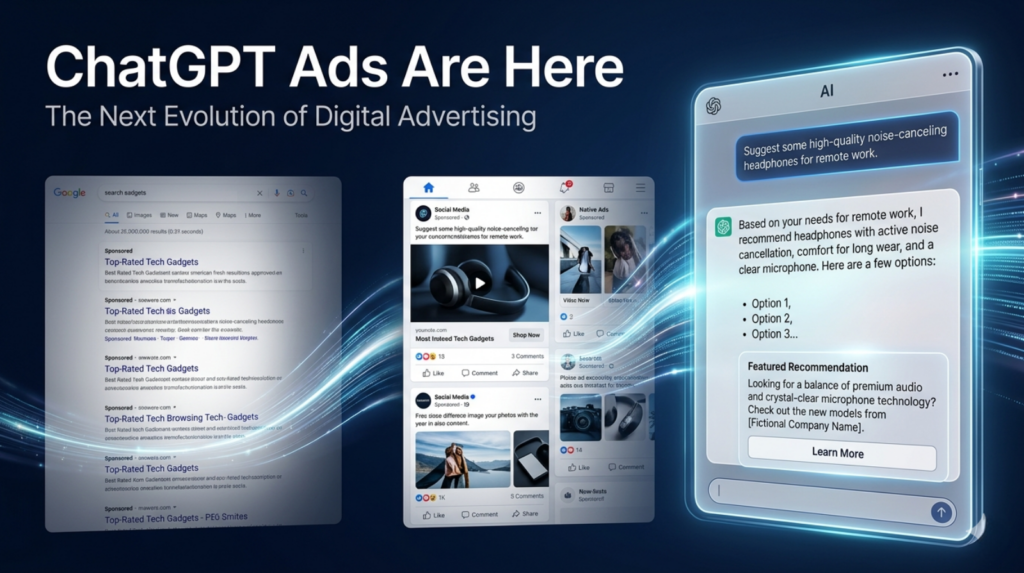
ChatGPT ads are designed to fit naturally within the user experience rather than interrupt it. Instead of competing for attention, they appear when users are already engaged with responses, creating a more contextual and less disruptive experience.
ChatGPT currently runs three confirmed ad formats:
| Ad Format | How It Looks | Where It Appears |
|---|---|---|
| Sponsored Recommendation Cards | A clearly labelled module that appears directly beneath ChatGPT's response, presenting a relevant brand or product suggestion. | Below the AI's answer, on both desktop and mobile. |
| Companion Display Ads | Like a mini landing page sitting inside the chat. Users can open it, browse product details, check pricing, and take action. | Desktop only, alongside the chat window. |
| Native Content Cards | The most immersive format. It expands into a card where users can explore a product, view pricing, and take action directly within the conversation. | Below the AI's answer, expandable on interaction. |
5. Cost of Advertising on ChatGPT
When the platform launched ads in February 2026, it came in at a $60 CPM, approximately three times the cost of Meta and Facebook advertising, and significantly higher than Google Search on a CPM basis. That was expensive. Here is how the platforms compare
| Platform | Average CPM | Average CPC |
|---|---|---|
| Google Display Network | $2 – $5 | $1 – $2 |
| Meta (Facebook & Instagram) | $6 – $10 | $0.50 – $2 |
| Google Search | $15 – $38 | $1 – $4 |
| ChatGPT at Launch (Feb 2026) | $60 | Not available |
| ChatGPT Now (Apr 2026) | $15 – $25 | $3 – $5 |
Since then, CPMs have already softened to as low as $25, and OpenAI introduced cost-per-click pricing with rates between $3 and $5 for general categories. ChatGPT commands a premium price for a genuinely unique placement, and there is a reason for that.
By the time someone engages with a ChatGPT ad, they have already explained their specific situation and received contextual information. A search ad click represents earlier-stage interest with far less qualification. The click you are buying on ChatGPT may simply be worth more, because the person behind it has already done more of the thinking.
Whether that translates into better ROI depends entirely on what you are selling. For high-consideration purchases, complex services, and high-value products, the pricing makes sense.
6. Measurement Is Still Catching Up
On Google and Meta, marketers have access to conversion pixels, audience insights, and detailed campaign dashboards. On ChatGPT, what you currently get is far more basic — impressions and clicks. There is no conversion tracking, and no way to follow a user from an ad click through to a purchase. For performance marketers, that is a significant adjustment.
OpenAI has indicated more detailed measurement capabilities may come over time, but for now, justifying spending without clear visibility into what is driving results remains a real challenge.
Should Your Brand Advertise on ChatGPT?
It depends on what you need from your advertising and how you measure success.
If your campaigns are built around strict cost per acquisition targets, conversion tracking, or budget efficiency, the platform is not yet equipped to meet that standard. In that case, a considered approach of monitoring the platform’s development before committing spend is the more prudent position.
However, if your business operates in a high-consideration category, is focused on brand building, or wants to understand what AI-driven demand looks like for your category, there is a credible case for early, structured testing.
The ad platform is still in its early stages. But the businesses that develop their understanding now will be better positioned when it does.
Ready to Explore ChatGPT Ads Further?
Staying ahead of where digital advertising is heading is what we do at SuperSoft DigiAds. Whether you want to understand what emerging platforms like ChatGPT Ads could mean for your business or simply get a fresh perspective on your current digital strategy, we would be happy to have a conversation.