Role of AI in Modern Social Media Marketing
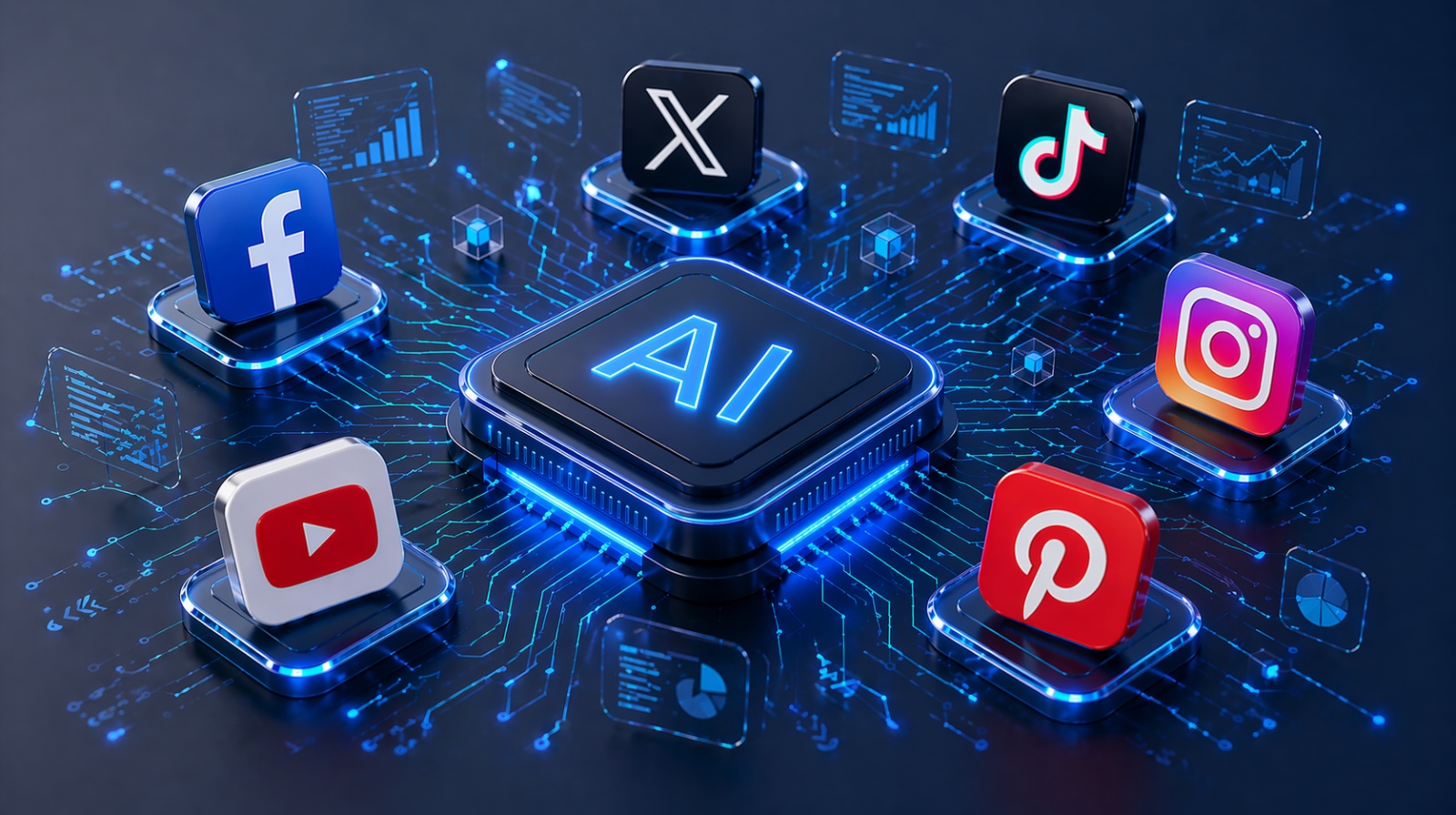
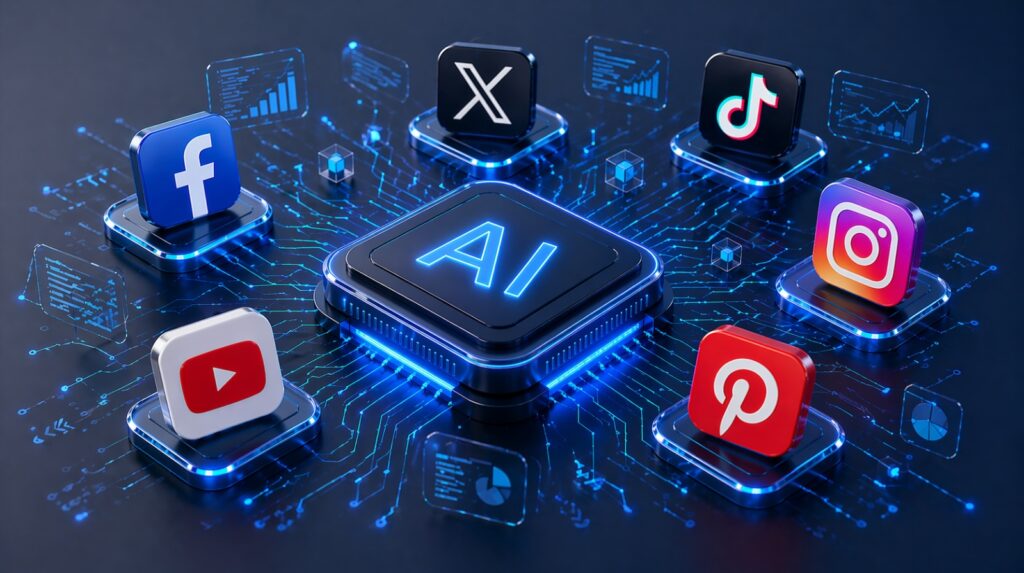
There’s a quiet shift happening in digital marketing and social media is at the center of it. Content creation has changed exponentially.The usage of AI in content creation is becoming increasingly prevalent as people gain access to more and more AI platforms. And it doesn’t stop there, social media platforms themselves are now integrating AI directly into their ecosystems.
AI is a powerful enabler, augmenting human capabilities rather than making them obsolete. But as AI continues to advance, the line between automation and authentic storytelling is getting harder to tell apart.
You’ve probably read a lot about AI replacing creativity. This guide isn’t about that. It’s about understanding what AI is actually doing to social media content creation and why that understanding is the need of the day.
1. Enhanced Planning and Research
The hardest part of content creation has always been starting. AI has proven to be highly effective at this, breaking the initial barrier of idea generation across various social media channels. It can generate captions, post variations, ad copy, content calendars, and campaign hooks in seconds, tasks that would otherwise take a human team considerable time to brainstorm and produce. A task that once consumed days, let’s say, creating 10 variations of ad copy for A/B testing, now only takes minutes. The efficiency gains are real and measurable.
But this doesn’t mean the human writer is liberated. Strategic nuance, an authentic brand voice, and the instinct for knowing when a joke will land and when it won’t, these are things AI cannot replicate. The human role doesn’t disappear; it simply shifts from execution to judgment.
2. Visual Content Generation
Creating compelling visuals has always demanded time, skill, and resources, but AI has significantly lowered that threshold. Image generation tools have put high-quality visual content within reach of anyone with a clear prompt and a creative direction. With a bit of refinement, the output can be polished enough to illustrate social media posts, blog headers, and campaign creatives.
Video is where things get even more interesting. AI video tools take generation a step further, moving from static imagery into animated and transformed content. AI face animators, for instance, can take a still photograph of a person and bring their facial expressions to life. Other platforms can reimagine the visual style of existing footage entirely, turning a live-action clip into an animated or cartoon version with minimal manual effort.
3. Analytics and Optimisation
Social media analytics used to be largely backwards-looking, and AI-powered analytics changes this. Rather than reporting on the past, it anticipates what’s ahead. Predictive tools can identify emerging trends before they peak, forecast which content formats will outperform, and flag audience fatigue before engagement starts to dip, giving teams room to adapt rather than scramble.
Beyond prediction, AI continuously optimises live campaigns, testing ad variations in real time and reallocating attention to the highest-performing assets while the campaign is still running. It doesn’t wait for the next review cycle to course-correct. It is always working, always refining.
4. Proofreading and Editing
Even the most experienced writers benefit from a second pair of eyes, and AI has become a remarkably capable one. AI editing tools can catch grammatical errors, flag awkward phrasing, suggest stronger word choices, and assess overall readability in real time.
But it goes beyond surface-level corrections. AI can analyse the tone of your content and flag whether it aligns with your brand voice, and adapt the content to a specific audience, whether that’s a technical LinkedIn post or a casual Instagram caption.
For social media, where a poorly worded post can attract the wrong kind of attention, having an AI layer in the editing process adds a meaningful quality check, especially when content is being produced at volume.
5. Scheduling and Distribution
Posting at the right time has always been part art, part science. Most teams defaulted to generalised “best time to post” guidelines that applied to everyone and therefore perfectly fit no one.
AI-powered scheduling tools have replaced that guesswork with precision. By analysing a brand’s audience behaviour, historical engagement data, and real-time platform signals, these tools identify the optimal moment to publish every piece of content automatically.
The result is a social media presence that operates with the consistency of a machine and the timing intelligence of a seasoned strategist, without requiring anyone to be on-call at 11 pm on a Thursday because that’s when your audience in a different time zone is most active.
The Bottom Line
AI is not a shortcut to good content. It is a system that expands what is possible when the right strategy and human judgment are steering it. The brands that will thrive are not the ones adopting every tool that launches; they are the ones who know how to use them with intent.
Social media has always rewarded consistency, relevance, and speed. AI can deliver all three at scale. What it cannot deliver is the voice, strategy, and judgment that make content worth engaging with. That part is still yours.
At Supersoft Digiads, we help brands combine the power of AI with the creative expertise that makes the real difference. Visit us at supersoftdigiads.com and let’s build something worth following.